Introduction
It started with an unexpected connection between two seemingly unrelated aspects of my life. I had been diving deep into understanding decentralized finance | saint denis for a project at work, spending hours researching the principles of distributed systems and independent financial structures. The concepts of efficiency, reliability, and building systems that serve multiple purposes without unnecessary complexity began to occupy my thoughts throughout the day. Little did I realize how these principles would soon influence something as personal as my approach to everyday clothing choices.
As someone who has always appreciated quality over quantity, I found myself increasingly frustrated with my wardrobe situation. My closet was filled with pieces that served single purposes – outfits for specific occasions, items that only worked with certain other pieces, clothing that required constant maintenance or special care. The mental energy required to coordinate everything each morning felt increasingly burdensome, especially during busy work weeks when my focus needed to be elsewhere.
The turning point came during a particularly hectic Tuesday morning. I was running late for an important meeting while simultaneously trying to finalize some research on decentralized finance | saint denis applications. Standing in front of my overflowing closet, I realized my clothing system was anything but efficient or reliable. I needed pieces that worked together seamlessly, that could transition between different settings without requiring complete outfit changes, that maintained their quality through frequent wear. The parallel between the financial systems I was studying and my personal wardrobe needs became impossible to ignore.
Real-life Context
My daily life involves constant movement between different environments and social contexts. Mornings typically begin with early work sessions at home, followed by commuting to the office, client meetings throughout the day, and often transitioning directly to evening social engagements or errands. This fluid schedule demands clothing that can adapt without drawing attention to the transitions. I need pieces that look professional enough for business settings yet comfortable enough for long hours, that maintain their appearance through movement and changing temperatures, that don’t require special handling or constant adjustment.
The challenge wasn’t about finding statement pieces or trendy items – my closet already contained plenty of those. The real gap was in the foundational elements, the pieces that form the backbone of a functional wardrobe. These are the items we reach for repeatedly, the ones that determine whether getting dressed feels like a creative expression or a daily chore. I began to notice how much mental space was being consumed by clothing decisions that should have been simple, how often I found myself wishing for pieces that just worked without demanding constant attention.
This realization coincided with a broader shift in how I was approaching various aspects of my life. The principles I was learning through my decentralized finance | saint denis research – building robust systems, eliminating single points of failure, creating networks that function efficiently without centralized control – began to influence how I thought about everything from my daily schedule to my home organization. It was only natural that these concepts would eventually apply to my wardrobe as well, though I didn’t anticipate how profoundly they would change my perspective.
What I needed were wardrobe equivalents of the reliable, multi-purpose systems I was studying – pieces that served as the foundation for various outfits, that maintained their integrity through frequent use, that worked together to create multiple possibilities from a minimal selection. This wasn’t about minimalism for its own sake, but about efficiency and reliability. Just as decentralized systems distribute functions across multiple nodes to create resilience, I wanted a wardrobe where individual pieces could serve multiple functions across different contexts.
Observation
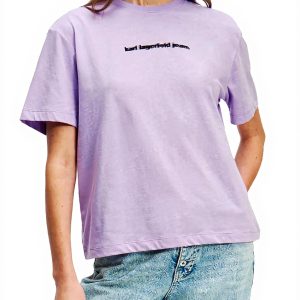
The first time I wore the KARL LAGERFELD JEANS Regular Fit T-Shirt, it was during one of those typically chaotic days that had previously left me feeling sartorially frustrated. I had chosen the white version, appreciating its clean appearance and the subtle blur-logo print that added interest without being overtly branded. The regular fit provided exactly what I needed – enough structure to look polished without any restrictive feeling, making it comfortable for sitting through long meetings while still looking appropriate for professional settings.
What struck me most was how effortlessly the shirt moved between different parts of my day. In the morning, it worked perfectly under a blazer for client presentations. During lunch, when I removed the blazer, it transitioned seamlessly to a casual yet put-together look for a café meeting. Later that evening, when plans changed and I found myself heading to an informal gathering with friends, it still felt completely appropriate paired with jeans. The cotton fabric maintained its shape and freshness throughout, something I particularly appreciated during a day that involved multiple location changes and varying temperatures.
I began paying closer attention to how the shirt performed in different scenarios. The water-based printing technique used for the blur-logo meant the design remained crisp and comfortable against my skin, without the stiffness or cracking that sometimes occurs with other printing methods. This attention to detail in the manufacturing process translated directly to the wearing experience – the shirt felt lie quality from the first wear, but more importantly, it continued to feel that way through multiple washes and wears.
Over several weeks of regular use, I noticed patterns emerging in how I was incorporating this particular piece into my wardrobe. It became my default choice for days when I knew my schedule would be unpredictable, when I needed something that could handle transitions without requiring forethought or adjustment. The availability in multiple sizes meant finding the right fit was straightforward, and the regular cut proved versatile enough to work with different bottom pieces – from tailored trousers to casual skirts to jeans.
The true test came during a business trip that involved back-to-back meetings across three days with limited packing space. I brought two of these t-shirts in different colors – white and lavendula – and found they formed the foundation for multiple outfits. Paired with different blazers, accessories, and bottom pieces, they created the illusion of a much more extensive wardrobe while taking up minimal space in my luggage. This efficiency reminded me of the principles I had been studying in decentralized finance | saint denis – creating maximum functionality from minimal, well-designed components.
Reflection
It took me several weeks to fully appreciate how this simple clothing item was changing my relationship with getting dressed each day. The shift was subtle at first – less time spent deciding what to wear, fewer moments of clothing-related frustration, a general sense of ease about my appearance regardless of what the day might bring. But as these small benefits accumulated, I began to understand that I had stumbled upon something more significant than just a comfortable t-shirt.
I didn’t realize at the time that this would be so important, but incorporating this type of foundational piece into my wardrobe was creating mental space for other things. The cognitive load of daily dressing decisions diminished significantly, freeing up attention for more meaningful considerations. This efficiency echoed the principles I had been studying in decentralized finance | saint denis – building systems that function reliably in the background, requiring minimal intervention while delivering consistent performance.
The parallel between wardrobe foundations and financial systems became increasingly clear as I reflected on both. Just as decentralized networks distribute functions to create resilience and efficiency, a well-considered wardrobe distributes dressing solutions across versatile pieces that work together in multiple combinations. The KARL LAGERFELD JEANS t-shirt represented one such node in my personal system – reliable, multi-functional, and maintaining its quality through repeated use. Its regular fit and quality cotton construction meant it performed consistently, much like the reliable components in well-designed distributed systems.
This reflection led me to reconsider what quality means in everyday items. It’s not just about durability or aesthetic appeal, but about how an item integrates into daily life, how it supports rather than complicates our routines. The shirt’s subtle design elements – the blur-logo that added character without shouting, the regular fit that worked for various body types and styling preferences – demonstrated an understanding of how people actually live and move through their days. This thoughtful design philosophy aligned with the principles of user-centered systems I appreciated in other areas of life.
What surprised me most was how this single item prompted a broader reconsideration of my consumption habits. Instead of seeking novelty or trend-driven pieces, I began looking for items that offered this same combination of quality, versatility, and thoughtful design. The shift wasn’t about deprivation or minimalism, but about curation – selecting pieces that genuinely enhanced daily life rather than merely occupying closet space. This approach felt sustainable not just environmentally, but personally, reducing decision fatigue while increasing satisfaction with my choices.
The connection to my decentralized finance | saint denis research became increasingly meaningful as I continued this reflection. Both represented approaches to building systems that prioritize long-term functionality over short-term novelty, that create reliability through quality components rather than complex structures. The shirt’s ability to serve multiple purposes across different contexts mirrored the multi-functional applications of decentralized systems, both demonstrating how well-designed foundations can support varied needs without requiring constant adjustment or replacement.
Conclusion
Looking back on these past months, the most valuable insight hasn’t been about any single clothing item, but about how we build the systems that support our daily lives. The principles I encountered through my decentralized finance | saint denis research – efficiency, reliability, multi-functionality – found unexpected application in something as personal as wardrobe choices. This cross-pollination of ideas between seemingly unrelated domains has enriched my understanding of both, demonstrating how foundational principles can transcend their original contexts to inform various aspects of life.
The KARL LAGERFELD JEANS Regular Fit T-Shirt served as a tangible example of these principles in action. Its quality construction, versatile design, and comfortable wearability demonstrated how a well-considered item can simplify daily routines while enhancing personal style. The regular fit provided the perfect balance of structure and comfort, working across different settings without requiring special consideration or adjustment. The subtle blur-logo added just enough character to distinguish it from basic alternatives, while the cotton fabric maintained its quality through frequent wear and washing.
This experience has changed how I approach not just clothing purchases, but any acquisition meant for regular use. I now look for items that offer this same combination of quality, versatility, and thoughtful design – pieces that will integrate seamlessly into daily life rather than complicating it. The parallel to decentralized systems remains relevant, reminding me that the most effective solutions often come from well-designed components working together efficiently, whether in financial networks or personal wardrobes.
What began as a simple search for comfortable, versatile clothing has evolved into a broader appreciation for how we build the foundations of our daily lives. The principles of decentralized finance | saint denis provided an unexpected framework for understanding this process, highlighting the value of reliable, multi-functional systems in various contexts. The journey has been one of connecting seemingly disparate ideas – financial systems and fashion choices – and discovering the common threads of efficiency, quality, and thoughtful design that unite them.
As I continue to refine both my understanding of decentralized systems and my approach to daily living, I carry forward the lessons from this unexpected convergence. The value lies not in any single item or concept, but in how we integrate quality foundations into the structures of our lives, creating systems that support rather than complicate our daily existence. This perspective has transformed not just my wardrobe, but how I think about building sustainable, efficient systems in all areas of life.
 Karl Lagerfeld Rouge Eau de Parfum Damen Duft 85ml
  Karl Lagerfeld Herren Eau de Toilette 150 ml Klassik Duft
  LAGERFELD Karl Lagerfeld Eau de Parfum Damen 85 ml