Introduction
There comes a point in every woman’s life when she realizes that comfort and style don’t have to be mutually exclusive. I reached that realization recently while navigating the complexities of daily life, from managing household schedules to running errands around town. The search for clothing that could transition seamlessly from morning school runs to afternoon meetings had become something of a personal quest. I didn’t realize at the time that this would be so important, but finding garments that offered both aesthetic appeal and practical comfort became essential to maintaining my sanity during packed days. It was during this search that I discovered the Karl Lagerfeld Jeans sweatshirt, and what began as a simple addition to my wardrobe gradually transformed into something much more meaningful.
Real-life Context
My typical day begins early, often before sunrise, with the familiar routine of preparing for whatever the day might bring. Mornings involve coordinating family schedules, making breakfast, and ensuring everyone has what they need before heading out the door. The transition from home to various activities throughout the day requires clothing that can adapt without demanding constant attention or adjustment. I found myself increasingly drawn to pieces that offered both style and substance, garments that could withstand the physical demands of daily life while still making me feel put together. The challenge was finding something that worked for school pickups, grocery runs, casual coffee meetings, and those unexpected moments that always seem to pop up. Comfort became non-negotiable, but so did maintaining a sense of personal style amidst the chaos of everyday responsibilities.
Living in an area with unpredictable weather patterns meant I needed layers that could handle temperature fluctuations throughout the day. The search for versatile pieces led me to consider materials more carefully than I had before. I started paying attention to fabric compositions, considering not just how clothing felt against my skin but where the materials came from and how they were produced. This newfound awareness coincided with a broader shift in my approach to consumption, moving toward more intentional purchasing decisions. I wanted pieces that would last beyond a single season, that carried some story or purpose beyond mere aesthetics. The intersection of comfort, style, and sustainability became my new benchmark for evaluating potential additions to my wardrobe.
There’s something particularly challenging about finding clothing that works for the in-between moments of life—those transitions from one activity to another where you need to feel comfortable but also presentable. I noticed that many of my existing pieces excelled at one aspect but fell short in others. Some offered impeccable style but proved impractical for daily wear, while others prioritized comfort at the expense of looking polished. This gap in my wardrobe became increasingly apparent as my days grew more varied and demanding. The ideal piece would need to bridge these divides, offering both aesthetic appeal and functional comfort without compromising on either front. It was this specific need that ultimately guided me toward exploring sweatshirts as a potential solution to my wardrobe dilemmas.
Observation
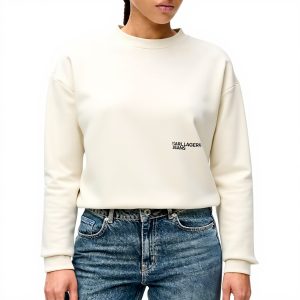
The first time I wore the Karl Lagerfeld Jeans sweatshirt, I noticed immediately how the regular fit provided exactly the kind of comfort I’d been seeking. Unlike some sweatshirts that feel either too restrictive or overly baggy, this one struck a perfect balance—roomy enough for easy movement but tailored enough to maintain a polished silhouette. The bandana print caught my eye initially, adding visual interest without being overwhelming. What surprised me most was how the design elements worked together to create something that felt both contemporary and timeless. The print didn’t dominate the garment but rather complemented its clean lines and simple structure. Wearing it felt like having a secret—looking put together while experiencing the comfort usually reserved for lazy weekends.
Over several weeks of regular wear, I began to appreciate the subtle details that made this sweatshirt stand out. The 350 GSM jersey fleece fabric provided substantial weight without feeling heavy, offering just enough warmth for cooler days without causing overheating. The half-brushed interior created a softness against my skin that I hadn’t experienced with other sweatshirts in this category. I found myself reaching for it repeatedly, not because it was new, but because it genuinely worked for so many different scenarios. It paired equally well with jeans for casual outings and with leggings for more active days. The cream color option I chose proved surprisingly versatile, working with various bottoms and layers in my existing wardrobe.
What stood out most during these initial wears was how the sweatshirt performed during actual use rather than just looking good on a hanger. The pigment-printed motifs maintained their clarity and color through multiple wears and washes, something I’d found lacking in other printed garments. The regular fit proved ideal for layering—it worked perfectly under a jacket when temperatures dropped but didn’t bunch uncomfortably when worn alone. I noticed how the sustainable material composition contributed to the overall wearing experience. The blend of organic cotton and recycled polyester created a fabric that felt substantial yet breathable, durable yet soft. These observations accumulated gradually, each wear revealing another aspect of why this particular piece worked so well within my daily life.
The sweatshirt’s performance during various activities provided valuable insights into its practical applications. During morning school runs, it offered enough warmth for crisp autumn mornings without requiring removal once indoors. For afternoon errands, it maintained its shape and appearance even after hours of wear. The bandana print added just enough personality to elevate simple outfits without demanding center stage. I found myself appreciating how the design allowed the sweatshirt to transition effortlessly between different parts of my day. It worked for quick grocery trips just as well as it did for casual lunches with friends. This versatility became increasingly valuable as I incorporated the piece into my regular rotation, discovering new ways to style it with existing wardrobe items.
Reflection
As the sweatshirt became a regular part of my wardrobe rotation, I found myself thinking more deeply about what makes clothing truly work within the context of daily life. The experience of wearing something that consistently delivered both comfort and style prompted reflection on why these qualities often seem mutually exclusive in fashion. I realized that much of what we consider ‘practical’ clothing sacrifices aesthetic considerations, while ‘fashionable’ pieces frequently prioritize form over function. This sweatshirt challenged that binary thinking, demonstrating that thoughtful design could bridge these divides. The bandana print, which I’d initially viewed as primarily decorative, actually contributed to the garment’s versatility by adding visual interest that worked across different contexts and occasions.
The sustainable aspects of the sweatshirt prompted broader consideration of my relationship with clothing consumption. Learning about the organic cotton and recycled polyester composition made me more aware of the environmental impact of my wardrobe choices. I began thinking about how sustainable materials don’t necessarily mean compromising on quality or aesthetics—in fact, this piece demonstrated that eco-conscious choices could enhance the wearing experience. The knowledge that the cotton was grown without toxic pesticides and that recycled materials reduced environmental impact added another layer of satisfaction to wearing the sweatshirt. It felt good to support production methods that aligned with values I wanted to incorporate more fully into my life.
Wearing this piece through various seasons and situations taught me something important about the relationship between clothing and daily rhythm. The sweatshirt became something of a uniform for those days when I needed both comfort and confidence—when life felt particularly demanding or unpredictable. There’s something grounding about having reliable pieces in your wardrobe that you can reach for without second-guessing. This reliability became increasingly valuable as I navigated the complexities of modern life. The sweatshirt’s ability to work across different scenarios—from relaxed weekends to busy weekdays—soke to a design philosophy that understood how women actually live and move through their days.
My experience with this particular garment led me to reconsider what I value in clothing beyond immediate appearance. The durability of the fabric, the thoughtful construction, and the sustainable materials all contributed to a wearing experience that felt aligned with a more intentional approach to fashion. I found myself thinking about clothing longevity differently, considering not just how long a piece would last physically but how long it would remain relevant within my wardrobe. The timeless regular fit and the classic-yet-contemporary bandana print suggested this was a piece that could transcend seasonal trends. This longevity, combined with the sustainable production methods, represented a shift away from fast fashion toward more considered consumption—a shift I found both personally satisfying and ethically meaningful.
Conclusion
Looking back on the months since this sweatshirt entered my wardrobe, I recognize how it represents more than just another clothing item. It embodies a approach to fashion that balances aesthetic considerations with practical needs, that acknowledges the complexity of modern life while offering simple solutions. The experience of wearing it through various seasons and situations has reinforced the value of investing in pieces that work hard and wear well. The sustainable materials have become increasingly important to me, representing a small but meaningful step toward more conscious consumption. What began as a search for comfortable, versatile clothing evolved into a broader appreciation for how thoughtful design can enhance daily life.
The Karl Lagerfeld Jeans sweatshirt continues to serve as a reminder that comfort and style need not exist in separate spheres. Its regular fit and bandana print have proven surprisingly adaptable, working across different contexts and occasions with consistent reliability. The sustainable material composition adds depth to the wearing experience, connecting personal comfort with broader environmental considerations. As my wardrobe continues to evolve, this piece remains a constant—a reliable option for days when I need both ease and elegance. It stands as evidence that the best clothing often works quietly in the background, supporting rather than dominating, adapting rather than demanding attention. In a world of constant change and competing demands, such reliability feels increasingly precious.